The short answer
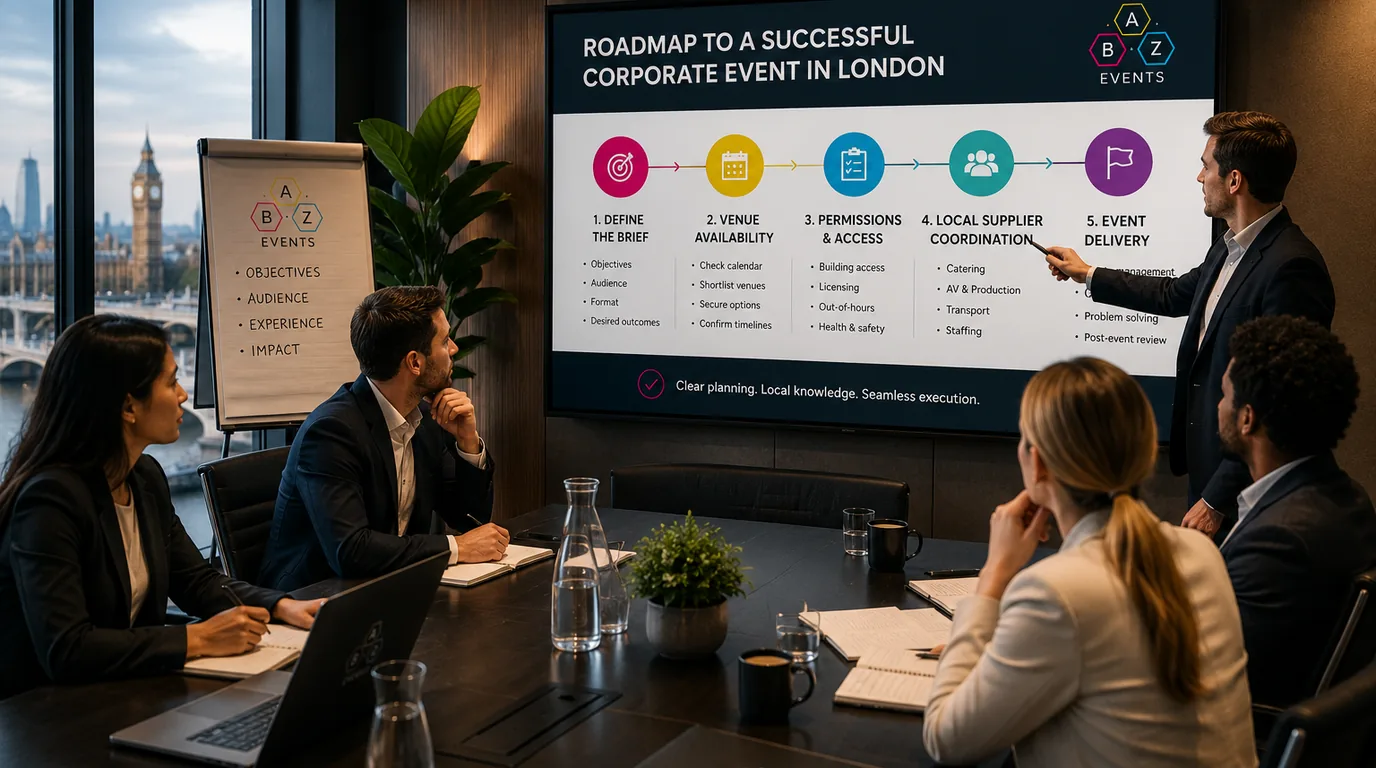
Full-service event management means one point of coordination is responsible for the event across its full lifecycle — from the initial brief through supplier sourcing, planning, production, on-site delivery and close-out — rather than a client managing multiple separate supplier relationships themselves.
It does not mean one company personally provides catering, AV, staging and entertainment. It means one company coordinates the specialist suppliers who do.
Before the event
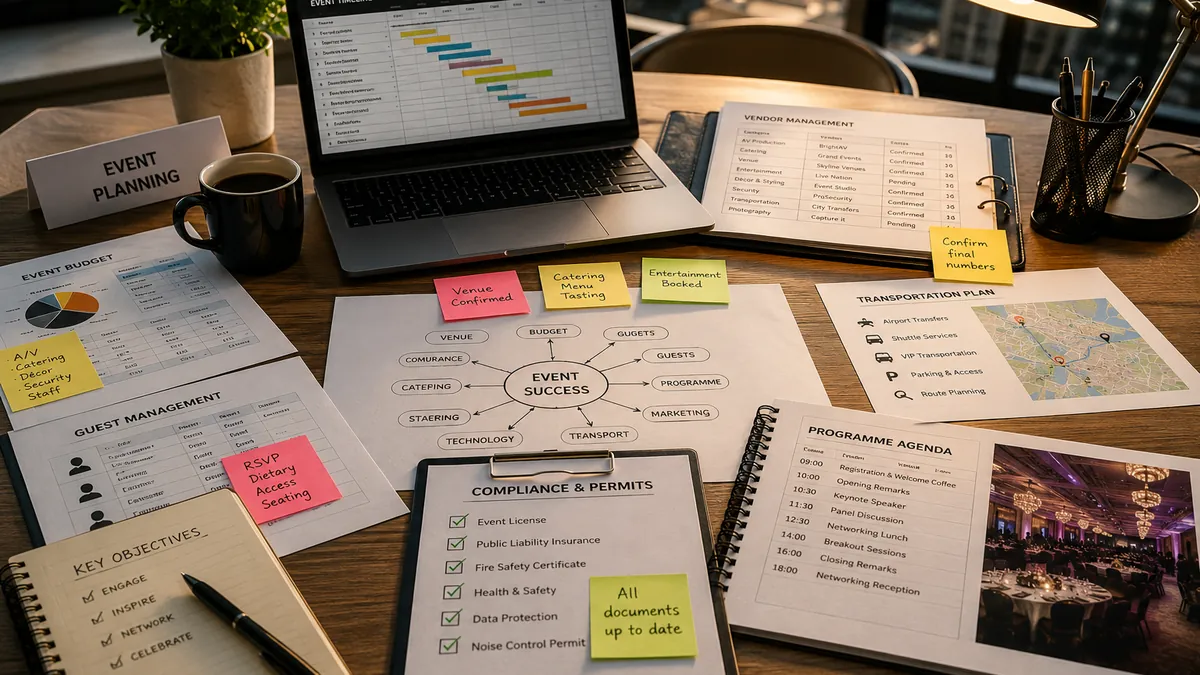
This is where most of the risk in an event is either removed or created. It typically includes developing the brief into a workable plan, identifying and sourcing the right venue and suppliers for the requirement, agreeing budgets and timelines, and building the event schedule that everyone — venue, suppliers, staff and client — works from.
During the event
On the day, full-service management means someone is responsible for keeping the different moving parts aligned: setup and get-in, supplier coordination, guest and delegate management, technical and production oversight, and troubleshooting the inevitable small issues that come up on any live event, before they become visible ones.
After the event
Close-out is often the part that gets skipped by less experienced providers. It includes breakdown and get-out, settling supplier accounts, and a debrief against the original objectives — useful information if a similar event is planned again.
What "full-service" does not mean
It does not mean handing over the brief and stepping away entirely — the client's objectives, audience knowledge and sign-off still sit with the client. And it does not mean every event needs the same level of service. A focused executive meeting and a large multi-supplier conference require different amounts of coordination, which is why the delivery should be built around the brief rather than sold as a fixed package.
This is the model ABZ Events works to across its six core service areas — coordinating the venues, suppliers, production, hospitality and logistics a brief actually requires, from the first conversation through to event-day delivery.