Start with the brief, not the venue
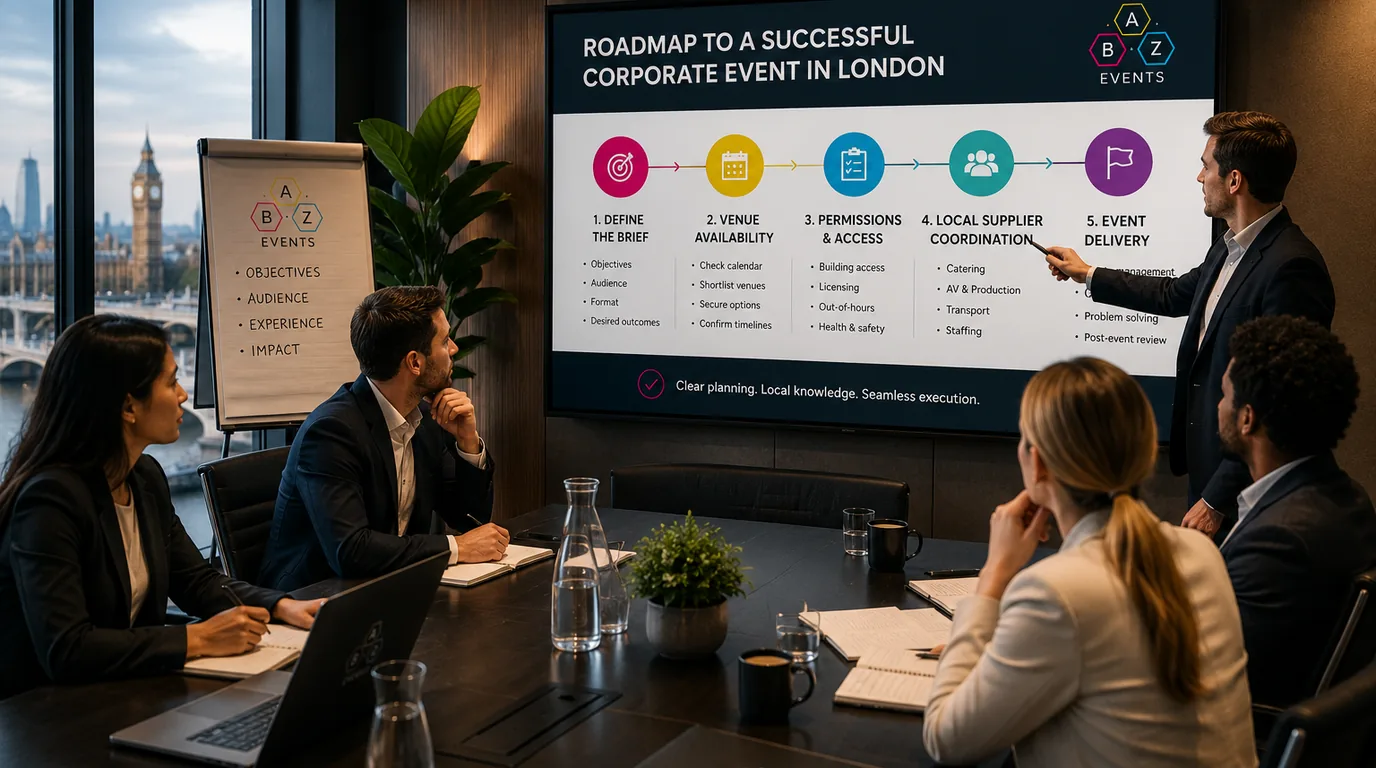
It is tempting to begin by shortlisting London venues. In practice, the brief should come first: the objective of the event, the audience, the number of guests, the format and the outcome you need. London has venues to suit almost any brief — hotels, private members' clubs, galleries, rooftop spaces, historic buildings and purpose-built conference centres — but that range only helps once the brief is clear enough to filter it.
International teams planning remotely sometimes reverse this order, choosing a venue first because it photographs well, then trying to fit the event around it. That usually costs time later, when catering, AV or capacity requirements do not match what the venue can actually deliver.
Venue availability works differently in London
Good London venues, particularly for autumn and early winter dates, are often booked months in advance. Central locations with strong transport links are in higher demand than the calendar might suggest, especially around the September to November conference season. If your organisation is planning from overseas, building in extra lead time for venue confirmation is one of the simplest ways to protect the date.
Build in time for permissions, access and logistics
Depending on the venue and the scale of the event, there can be practical steps that are easy to underestimate from abroad: loading access for production equipment, out-of-hours building permissions, licensing for certain types of entertainment, and coordination with building management or security teams. None of this is unusual, but it needs to be identified early rather than discovered during setup week.
Local supplier coordination matters more than it seems
Catering, AV, staging, transport and staffing in London are typically delivered by specialist local suppliers rather than a single venue-provided package. That is generally a good thing — it means the event can be built around the brief rather than a fixed menu of options — but it does mean someone needs to coordinate multiple suppliers against one schedule, one venue and one set of expectations.
For a team managing this from outside the UK, that coordination layer is often the difference between a smooth event day and a stressful one.
What a London-based partner adds for international teams
Working with a UK-based event management partner does not replace your team's objectives or decisions — it adds someone on the ground who understands current venue availability, local supplier relationships, realistic timelines and the practical detail of delivering an event in London. That is particularly useful when your organisation is coordinating the event from a different time zone, or running it alongside teams who have never delivered an event in the UK before.
ABZ Events works with international clients on exactly this basis — coordinating the venues, suppliers, production and logistics required around the brief, so the event is built around what the client is trying to achieve rather than around what happens to be available.